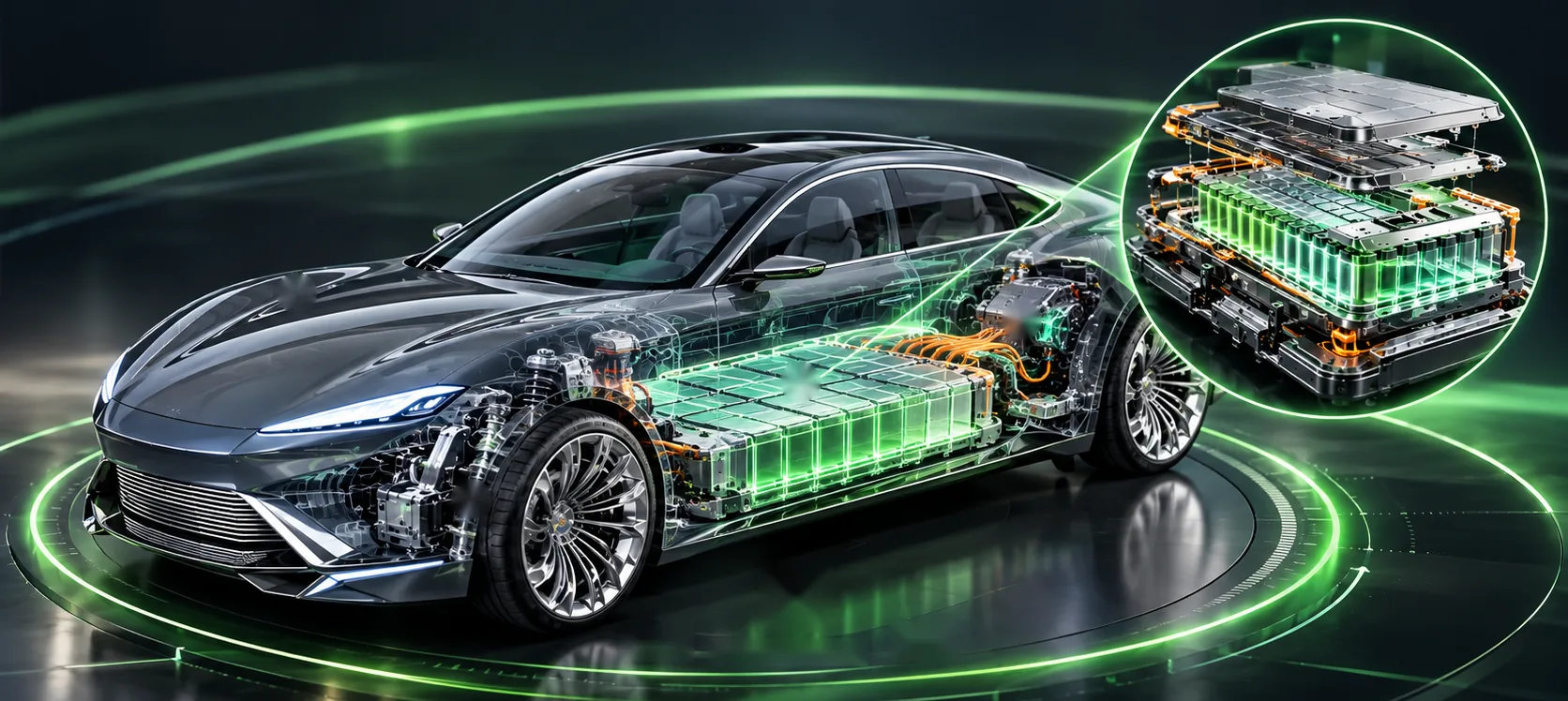
One parts list
Enclosure, mass and bill of materials come from the same parts the 3D view draws. Pick prismatic or cylindrical cells, set voltage and space, and every arrangement that fits is listed, smallest first.
BMW i3 pack mass −2 %, Tesla Model 3 −7 %, both untuned.
Every cell simulated
The pack twin runs each cell on CellBench's equivalent-circuit model, wired through the busbars and cooled through the hardware the engine drew: discharge, charge, fast charge and eVTOL missions.
A real CALB 58 Ah cell, fitted from one pulse test and one slow discharge, predicts 30 drive cycles on 10 other cells to 10.6 mV on average.
Honest about limits
Each result says whether it was measured, from a datasheet, assumed or borrowed from a similar cell. Anything never compared with a test is marked not validated, never a pass.
Pack-level thermal and safety results are not yet validated against pack tests.